Ryvakai

Original IP · Unreal Engine 5.8 · Server-authoritative

Ryvakai

An open-world survival action RPG about moving fast through a hostile place and paying for every advantage you take. Vitality keeps you alive. Stamina buys you distance. The Veil buys you everything else — and it is the only resource the world will not give back quickly.

RYVAKAI is in pre-alpha. What follows describes the v0.1 vertical slice that exists in the repository today: six Techniques, five archetypes, one region, one apex predator, and a backend that decides all of it. The first playable test build — a movement lab, not the finished world — installs through the launcher below.

Version
0.1 · pre-alpha
Engine
Unreal Engine 5.8.1
Client
Native · Windows
Backend
Go · PostgreSQL · Redis
Networking
Listen server, 7777/UDP

01 — Design

Six decisions the whole game is built on

Every one of these is a rule in the project's binding architecture contract, not an aspiration. A feature that breaks one of them is a defect and does not merge.

Authority

The server owns the outcome

Damage, death, loot, resources, inventory, crafting, structures, cooldowns and technique unlocks are decided by the authoritative server against its own clock and its own attribute set. The client predicts movement and plays cues. It never applies a point of damage.
Traversal

Movement is a real state machine

Slide, wall-run, mantle, climb and dash are custom movement modes inside the engine's own saved-move prediction — not scripted teleports. That is the difference between traversal that survives a 120 ms correction and traversal that snaps you back into a wall.

Combat

The parry is decided on the server

An attack has a server-side timeline. A defender has a server-side window. A client's "I parried" is a request with no timestamp attached; the server stamps it on arrival and compares the two. Nothing about the outcome is taken from the attacker's or the defender's machine.

Techniques

Techniques are data, not classes

A Technique is an Essence, a Form, a behaviour, a set of modifiers, a power and a casting condition. One generic ability reads that data and drives a Form strategy object. Adding the seventh Technique is authoring a data asset, not writing a class.

Persistence

The world remembers, transactionally

Character state, inventory, equipment, unlocked Techniques and every placed structure live in PostgreSQL. Saves are versioned and optimistically concurrent: a write carrying a stale version is refused, so two servers can never quietly overwrite each other.

Measurement

Nothing is tuned by guessing

Every gameplay tunable is designer-facing data, never a literal in code. Every system exposes a debug readout or a console command. Frame-time cost is measured before a feature is called done, and the person who implemented it is not the person who approves it.

02 — Techniques

Six Techniques ship in v0.1

Each one is an Essence expressed through a Form. Five Form classes cover all six. Every Technique costs Veil; one also costs Stamina. Cooldowns complete on the server's clock, never yours.

01

Gale Step

Gale Movement form Veil + Stamina Client-predicted

A directional Veil dash — forward, back, left, right, in combat and out of it. It runs as a custom movement mode inside the engine's own saved-move prediction, which is why it stays smooth under correction instead of rubber-banding. The ability only requests the dash; the movement component on the server decides whether it happens.

02

Ember Arc

Ember Projectile form Veil Cue predicted

A wide crescent of ember light thrown on a shallow arc. It is a formation, not a ball of fire: broad, flat, and slow enough to be stepped around. It sweeps a lane rather than hitting a point, so it punishes people who commit to a direction — and rewards anyone willing to stop moving in one.

03

Bastion Rise

Stone Construct form Veil Cue predicted

A slab of stone driven up out of the ground between you and whatever you are looking at. It blocks movement, blocks projectiles and breaks line of sight — the game's answer to every projectile Technique, including its own. Placement is validated entirely on the server: distance, then ground, then slope, then overlap clearance. A wall can never be raised over a chasm, on a cliff face, or inside another player.

04

Storm Needle

Storm Projectile form Veil Cue predicted

A single hairline discharge. Very fast, very small radius, punishing to aim and punishing to be hit by. It is the same Form class as Ember Arc, separated from it only by the data on its definition — which is the whole point of composing Techniques instead of hand-writing them.

05

Mirror Echo

Void Echo form Veil Cue predicted

You tear a fractured shard of yourself out of the Veil. It takes the shape it can, goes after whatever you were looking at, fights badly for a few seconds and comes apart. Exactly one Echo per caster, enforced on the server at spawn time. Its expiry is a replicated server timestamp, so your HUD, the Echo's dissolve and every observer's copy all read the same clock.

06

Veil Mend

Radiance Mend form Veil Cue predicted

A long, obvious, breakable moment spent knitting yourself back together. The cast is public and interruptible by design. Spamming it is answered with diminishing returns rather than an escalating cost — being punished with a weaker heal is fair; being punished by losing the ability to act at all is not. The healing itself is never predicted: watching Vitality rise and then having it taken back is the worst misprediction in the game.

Three resources, all server-authoritative. Vitality does not regenerate passively — you heal deliberately or not at all. Stamina returns after a short pause, and blocking at zero breaks your guard. Veil trickles back constantly and faster out of combat: it is the pacing lever for the entire game.

03 — Cast

Five archetypes, one resource budget

Every archetype spends the same total across Vitality, Stamina and Veil, and differs only in how it splits them. None is strictly stronger than another; each is strictly worse at something. The bars below are drawn on one shared scale so the trade is visible rather than described.

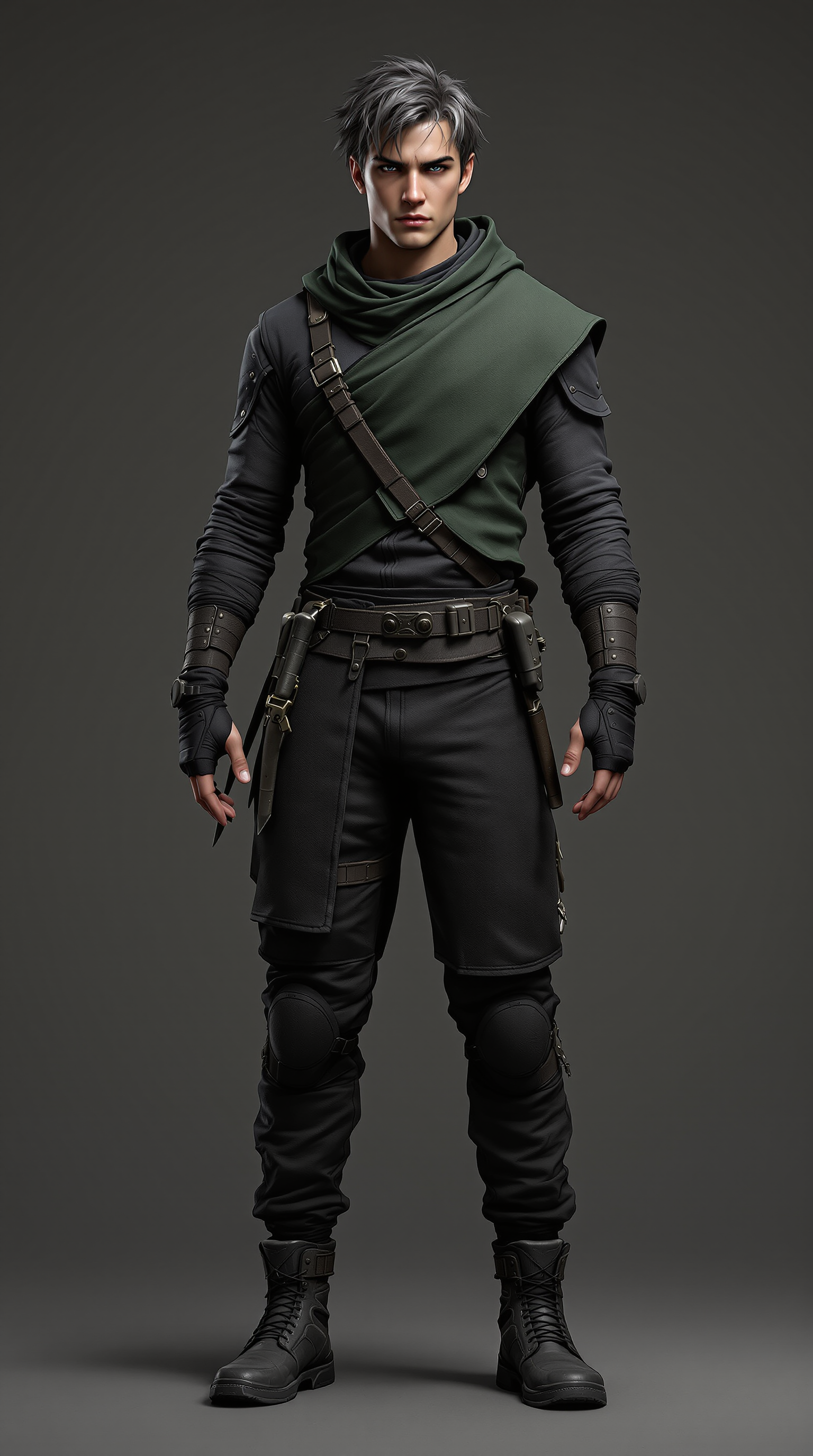
Ren Vale, a lean scout in layered charcoal combat clothing with a single forest-green shoulder mantle.

Ren Vale

Gale
Scout Opens with Gale Step

A wiry runner's build under layered charcoal clothing cut for speed, with a single asymmetric forest-green mantle over the left shoulder and both forearms tightly wrapped. Matte conduit fittings are set into the harness at shoulder and hip; a slim blade rides across the lower back. The silhouette reads fast, quiet and precise.

The balanced profile — even footing in every discipline, and the one the other four are measured against.

Reconstruction mesh — pre-alpha, not the in-game character.

Vitality110
Stamina110
Veil100
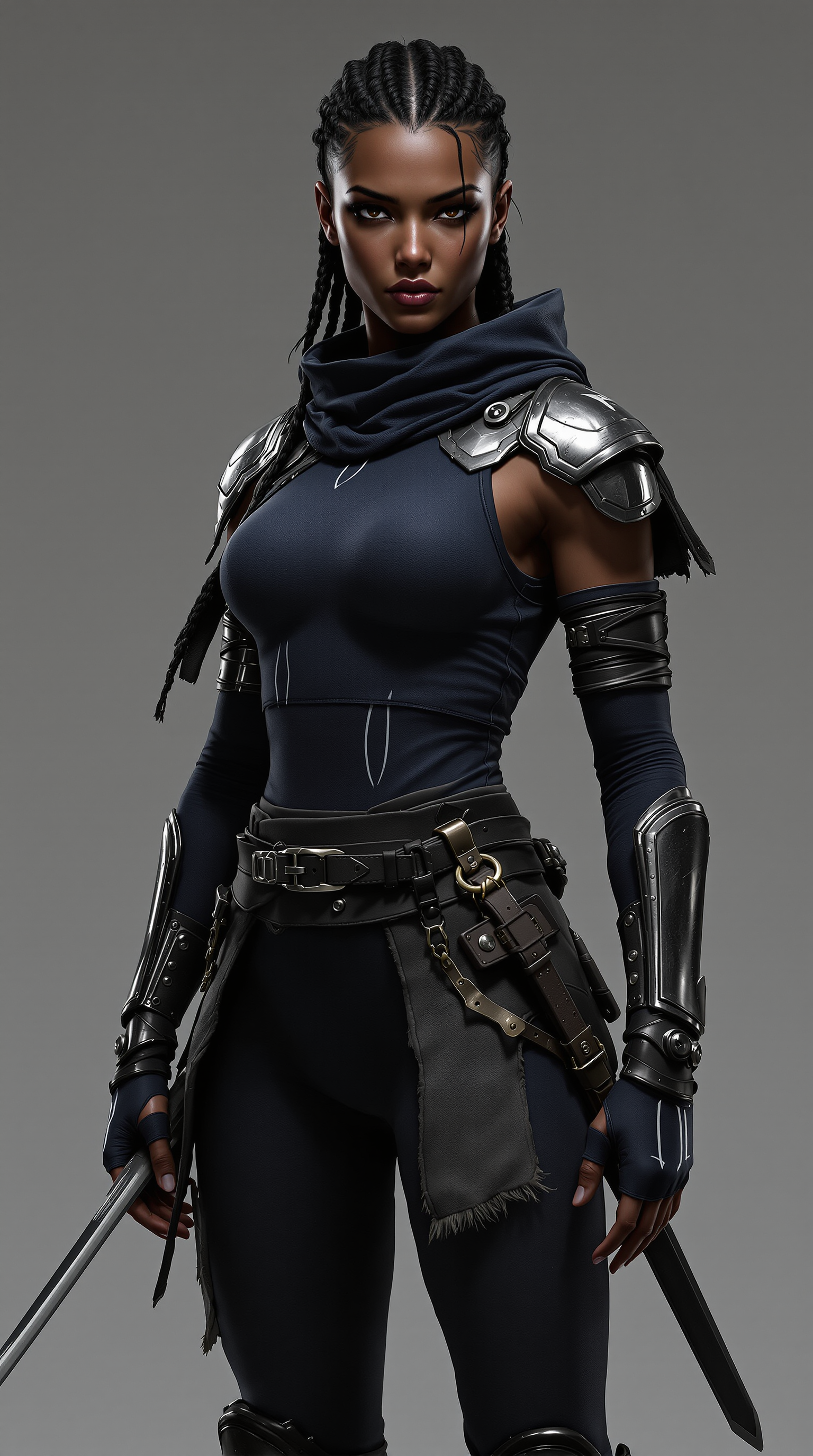
Nyra Voss, a stormblade in deep navy combat clothing with conductive plate at the shoulders and a curved sabre at the hip.

Nyra Voss

Storm
Stormblade Opens with Gale Step

Lean fighter's build, dark bronze skin, black hair pulled into tight braids with the left side of the scalp shaved to stubble. Deep navy close-fitting combat clothing under thin conductive plates at shoulders, forearms and shins; a short weathered cloak hangs from one shoulder, frayed at the hem. A long curved single-edged sabre sits at the left hip. Faint energy lines trace her forearms, unlit until they are not.

The swift skirmisher — trades durability for the Stamina to keep moving long after an opponent has stopped.

Reconstruction mesh — pre-alpha, not the in-game character.

Vitality90
Stamina140
Veil90
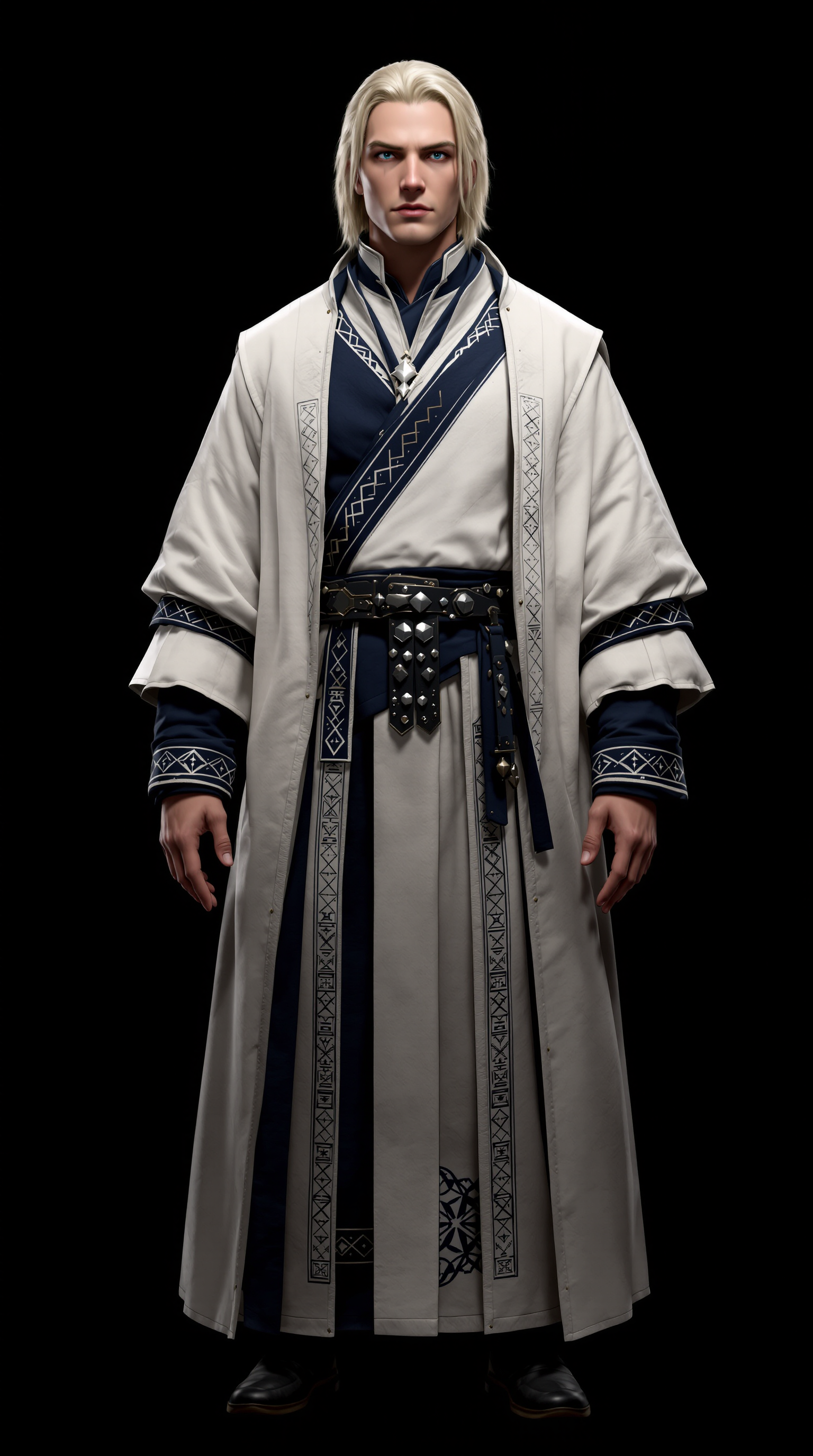
Elian Ro, a Veil scholar in structured ivory and dark indigo layers with slim metal focusing rings at the wrists.

Elian Ro

Radiance
Veil Scholar Opens with Ember Arc

Tall, still, composed. Pale blond hair to the jaw. Layered ivory and dark indigo garments — structured and tailored, neither a robe nor a uniform — with quilted armour panels concealed beneath the outer layer and fine geometric embroidery at collar, cuff and hem. Slim polished focusing rings at the wrists and at the belt. No pouches, no clutter. The silhouette reads precise, controlled, analytical.

The deepest reserve of Veil in the cast, carried on the thinnest margin of Vitality.

Reconstruction mesh — pre-alpha, not the in-game character.

Vitality85
Stamina95
Veil140
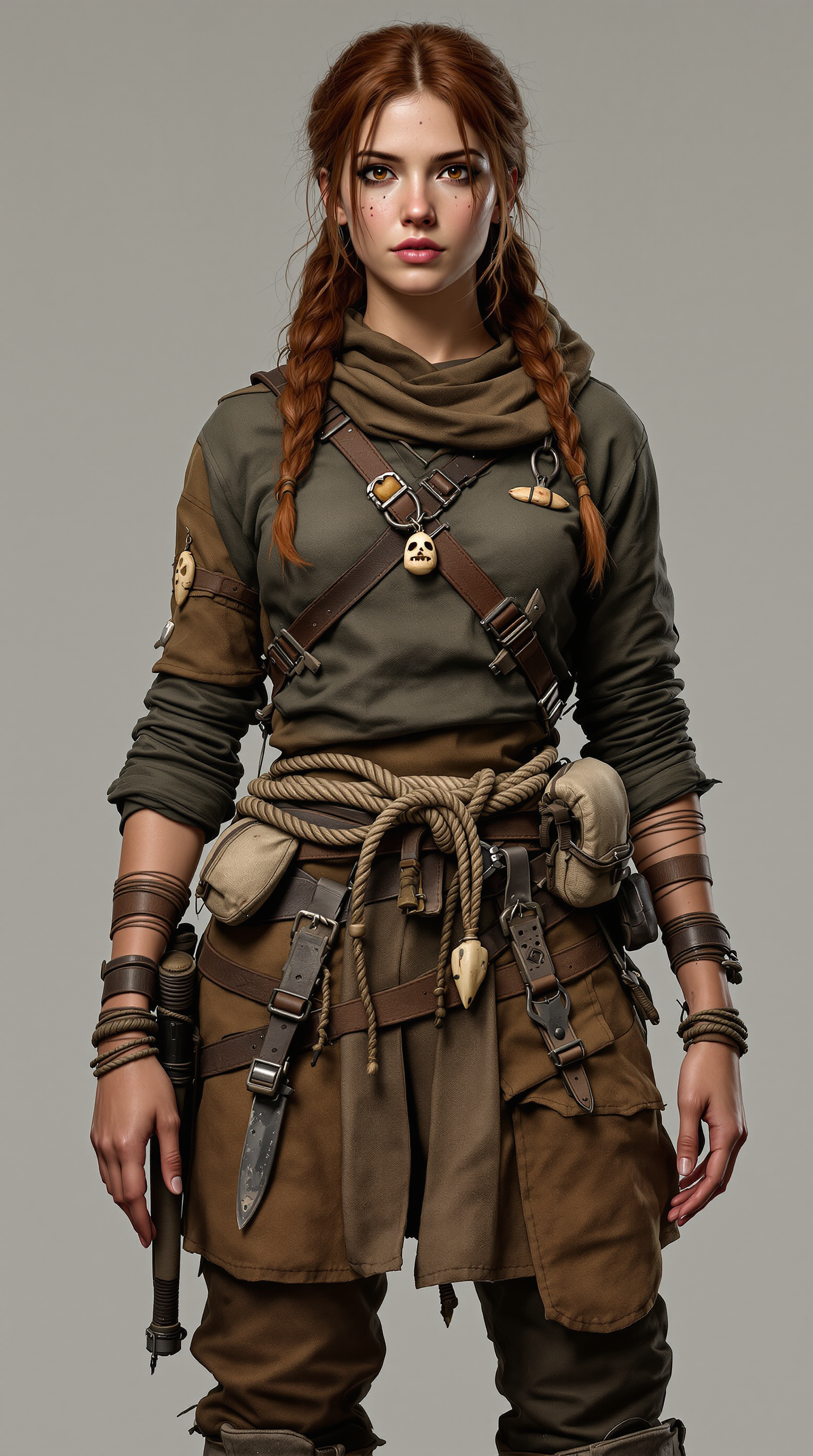
Mira Kesh, a wildbinder in weathered earth-tone layers with a leather harness, climbing rope and carved tokens at the belt.

Mira Kesh

Bloom
Wildbinder Opens with Veil Mend

Built by the outdoors. Dark auburn hair braided partly back, weathered earth-tone layers in moss, ochre and brown, visibly repaired. A leather harness with buckled straps, canvas satchels, coiled rope and a hooked anchor at the hip, a short utility blade at the thigh, thin pale scars along the forearms. Small carved bone and wood tokens hang on cords at her belt and shoulder — the first sign of the Covenants.

Sustains a band longer than any archetype can sustain itself.

Reconstruction mesh — pre-alpha, not the in-game character.

Vitality100
Stamina100
Veil120
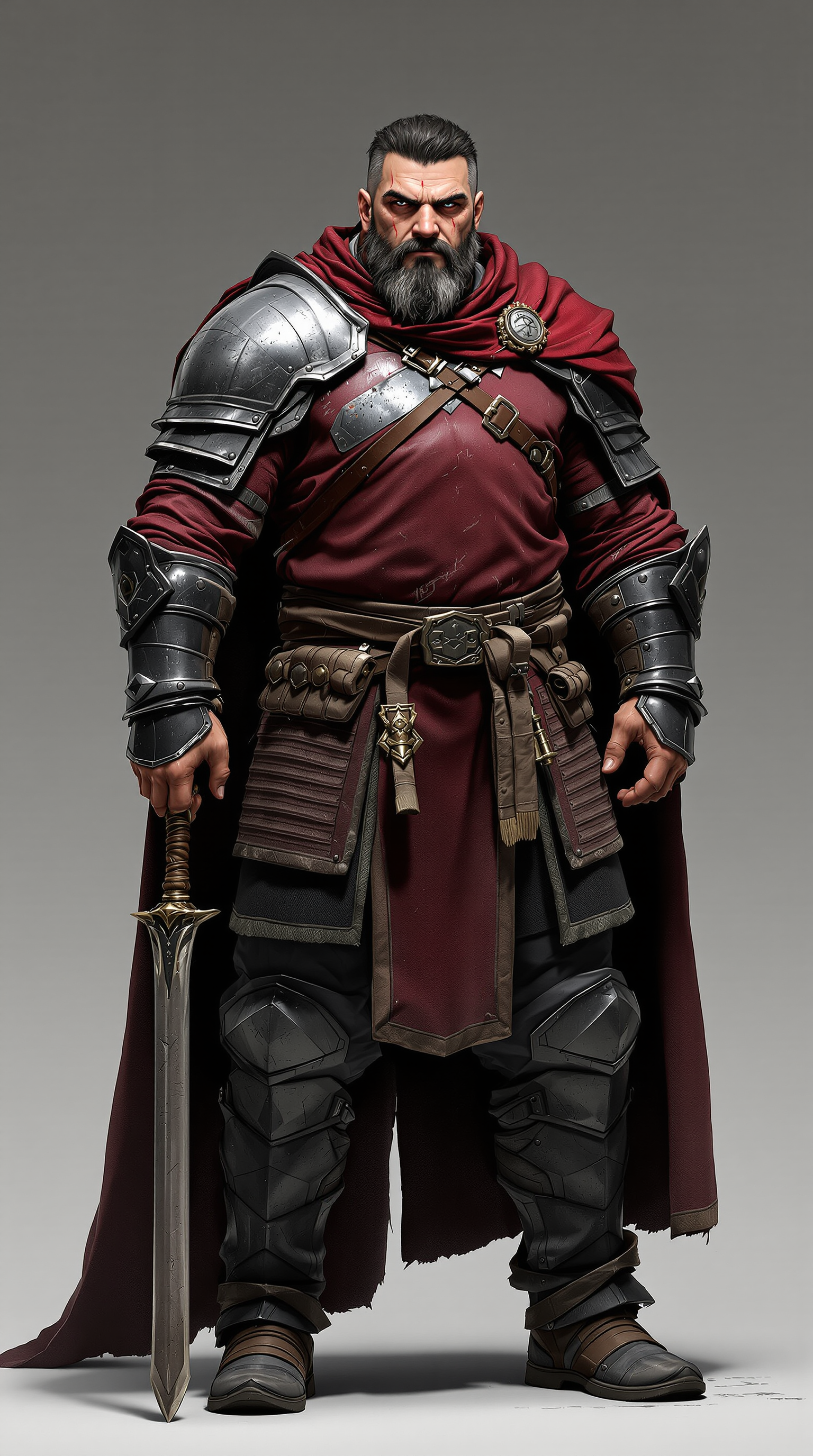
Tor Varen, a heavyset veteran Warden in oxblood and charcoal armour with limited plate at the shoulders and a cape from one shoulder.

Tor Varen

Stone
Warden Opens with Bastion Rise

Real mass and real years. Short dark hair greying hard at the temples, a trimmed beard shot through with grey, a weathered face carrying old combat scars. Deep oxblood and charcoal armour over flexible layered fabric, with limited plate at shoulders, forearms and shins only so the torso stays mobile. A heavy cape falls from one shoulder, worn and dust-stained. He carries a long heavy poleblade, grounded beside him.

The stone bulwark — absorbs what the others must avoid, and pays for it in the Veil he has left to answer back with.

Concept plate shows a longsword; the design specifies a poleblade. Correction is queued for production art.

Vitality150
Stamina110
Veil60

These are pre-alpha concept plates and single-view reconstruction meshes — art direction reference, not finished in-game characters. The production path (retopology, rigging to the shared humanoid skeleton, skin weighting, LODs) is budgeted work that has not happened yet, and we would rather say so here than imply otherwise with a render.

04 — Apex

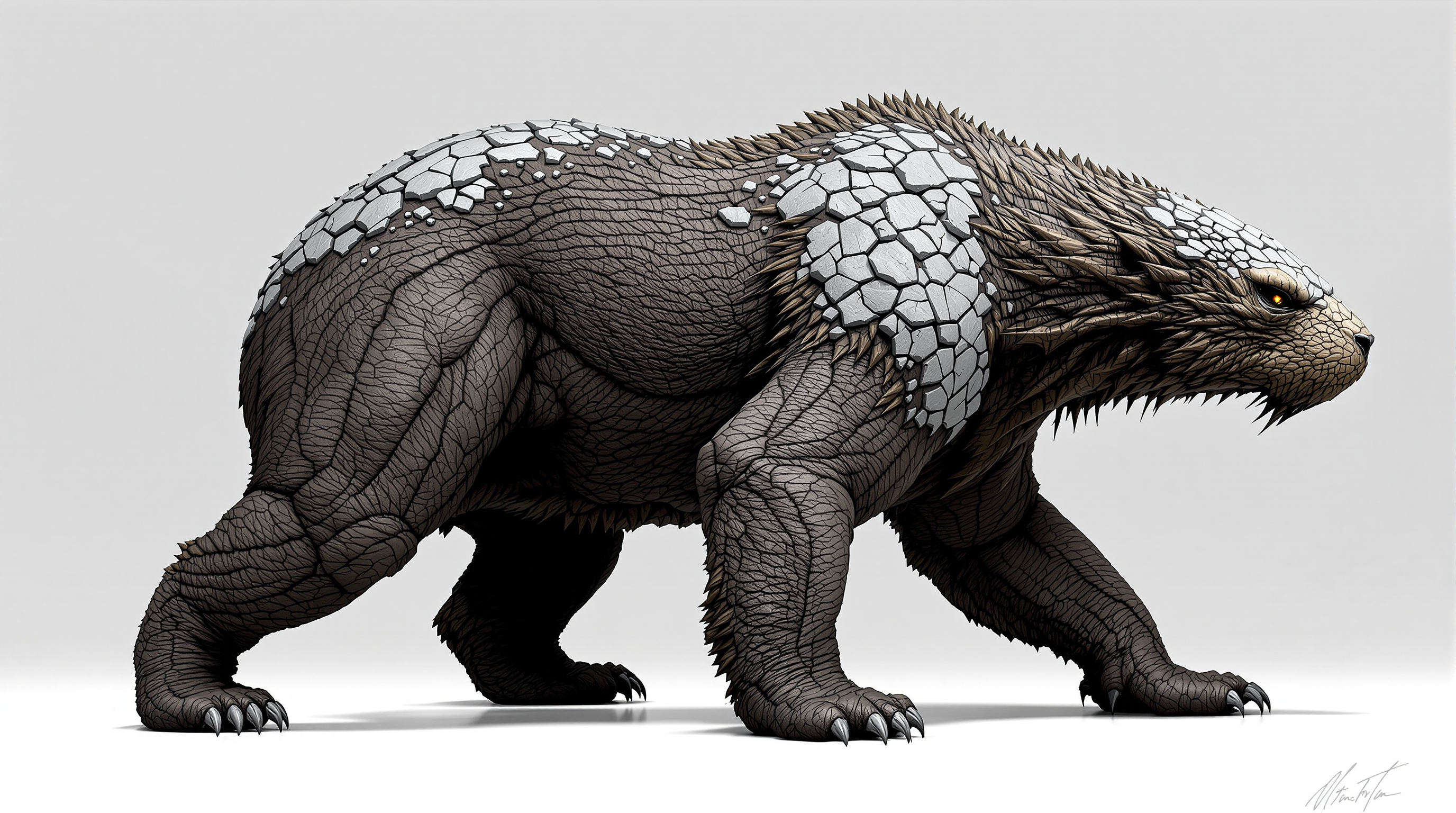
Varkuun

Varkuun, a heavy quadruped predator with long forelimbs, raised shoulders and mineral plates erupting in patches through its hide.

The first thing in RYVAKAI that hunts you back.

A quadruped at large-bear scale: heavy through the shoulders, low through the hips, with front limbs noticeably longer than the rear so it stands nose-down and moves with a pulling, digging gait rather than a running one. Splayed clawed forepaws carry most of its weight and are its primary weapons.

Mineral growths erupt through the hide in irregular patches — shoulder, spine, forelimb — with bare weathered hide between them, so the silhouette is lumpen and asymmetric rather than plated. Its sensory anatomy is unevenly placed and unmatched left to right, which is why its perception is authored as a real cone with peripheral falloff instead of the usual all-round awareness. Veil fractures run beneath the skin as luminous sub-dermal lines that widen between phases.

It is an animal first and a supernatural thing second. It has musculature, weight and a real gait; the Veil is something happening to it.

Varkuun runs on the same enemy stack every other creature does — the same combat component, the same attribute set, the same damage funnel. The only thing that makes it a boss is a phase component and the numbers on its archetype. There is no separate boss health system and no boss-only damage path to balance against.

05 — World

One valley, and a clock that does not stop for you

v0.1 is a single region. Everything in it is owned by the server: the time of day, the weather, what a node yields, what a recipe produces and whether a structure is allowed to stand where you put it.

Time and weather

Sunrise, day, sunset, night — and rain

Only the server advances the authoritative clock and rolls the weather chain. Both are published to game state in a form that costs almost nothing to replicate, so every player in the region shares one sky rather than each simulating their own.

Gathering

Six resources

Wood, Stone, Iron, Fiber, Herbs and Veil Crystal. Nodes deplete after a number of harvests and respawn on a jittered timer, so a cleared forest does not come back all at once. Depletion, respawn and — above all — the item grant are server-only.

Crafting

There is no client-side crafting path

A recipe key and a batch count go to the server, which checks every precondition itself and holds the in-progress craft. Your client draws a progress bar; it is never trusted with the outcome.

Building

Ghost on the client, re-derived on the server

Your machine draws the preview and finds snap candidates. The server then re-derives the placement from first principles and decides whether it is legal. What survives that check is written to the database against its region, and is still there when you log back in.

Enemies

Six attackers, one attack

AI is serviced on a round-robin with a hard per-frame cap, so its cost is a flat slice of the server tick rather than something that scales with population. A per-target token pool decides who may commit an attack right now — six enemies swinging on the same frame is the single most common reason action combat reads as cheap, and that pool is the fix.

Camera

Blended, never snapped

The camera is a stack of blend-weighted modes, each answering "where should the view be for this situation". It is purely local and purely cosmetic: lock-on legality and hit legality are both decided on the server from world transforms, so a tampered camera shows you more scenery and buys you nothing.

06 — Honesty

What v0.1 is not

Games get oversold at this stage. Here is the same list we work from internally.

  • The playable build is a movement lab, not the game: one grey-box test level for traversal feel — sprint lanes, jump blocks, mantle ledges, slopes, wall-run galleries. The open world, quests and finished content do not exist yet.
  • Production content — final levels, animation, audio, materials — is not built. The code paths and hooks exist; the assets are placeholders.
  • Character meshes are single-view reconstructions from concept art. They have no skeleton and no skin weights and cannot be animated. Retopology and rigging are budgeted, not done.
  • Pre-alpha multiplayer runs as a listen server — one player hosts, and that host is the authority. A true dedicated server needs a source-built engine and is roadmap work, not a shipped feature.
  • Scope is one region, five archetypes, six Techniques and one apex predator. That is the whole of it.
  • We make no claim about large-scale warfare or player counts. Capacity is whatever one server process holds, and we have not published that number because we have not measured it under load.
  • There is no release date, no store page, no pre-order and nothing to buy.