02 — World
The Veil got here first
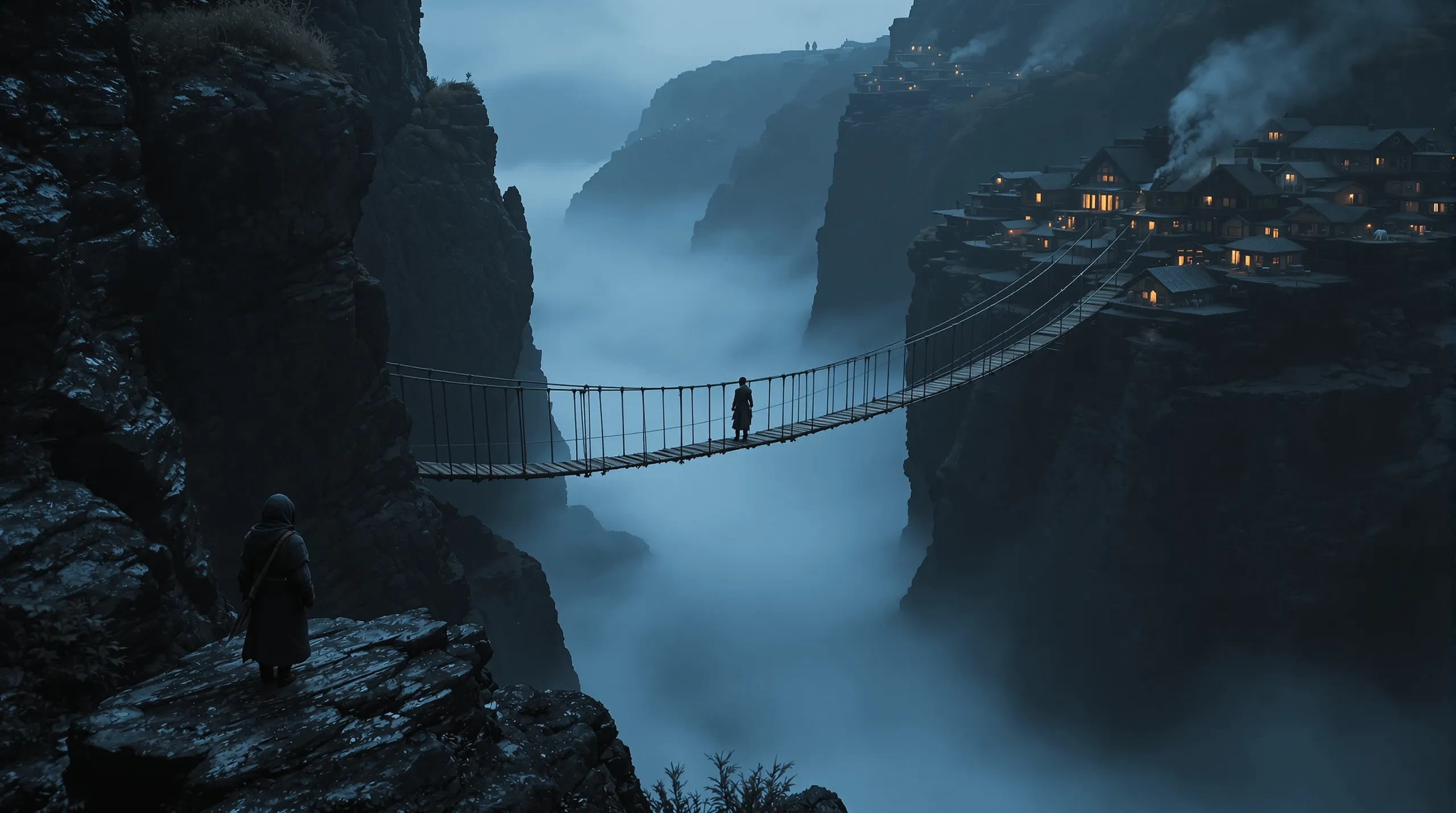
An original ninja-fantasy survival action RPG set on a cold coast where the ground carries power and hands it out slowly. The Veil rises through stone as pale cyan-violet light, and every Technique you know is drawn from a reserve that refills at its own pace and will not be argued with. Most of what you do here you will do on foot, with rope, in the dark, saving the light for the moment that actually needs it.
RYVAKAI’s lore is deliberately thin at this stage. What follows is settled, written down and binding on every asset we make. Everything else gets written when there is a world to put it in — and the test build you can download today is a movement lab, not this coast.
The Veil
The Veil is in the stone. It shows as thin cyan-violet light in fractures, under wet rock at low tide, along the seams of a cliff face after rain. Fire is the other light on this coast and it is nothing like it: a lantern is warm, close, and yours. A lit seam is cold, and it was there before you.
You carry a measure of it. Techniques spend it. It comes back slowly, faster once nothing is trying to kill you, and there is no way to hurry that. This is why people here plan their days around it — a warden walking a cliff path in fog takes the rope line and the lantern rather than a Technique, because oil is cheap and the Veil is not.
Nobody on this coast agrees on what the Veil is. They agree on where it sits, how much a person can hold, and what happens when someone spends more than they have. Those three questions are enough to organise a life around, and most people stop there.
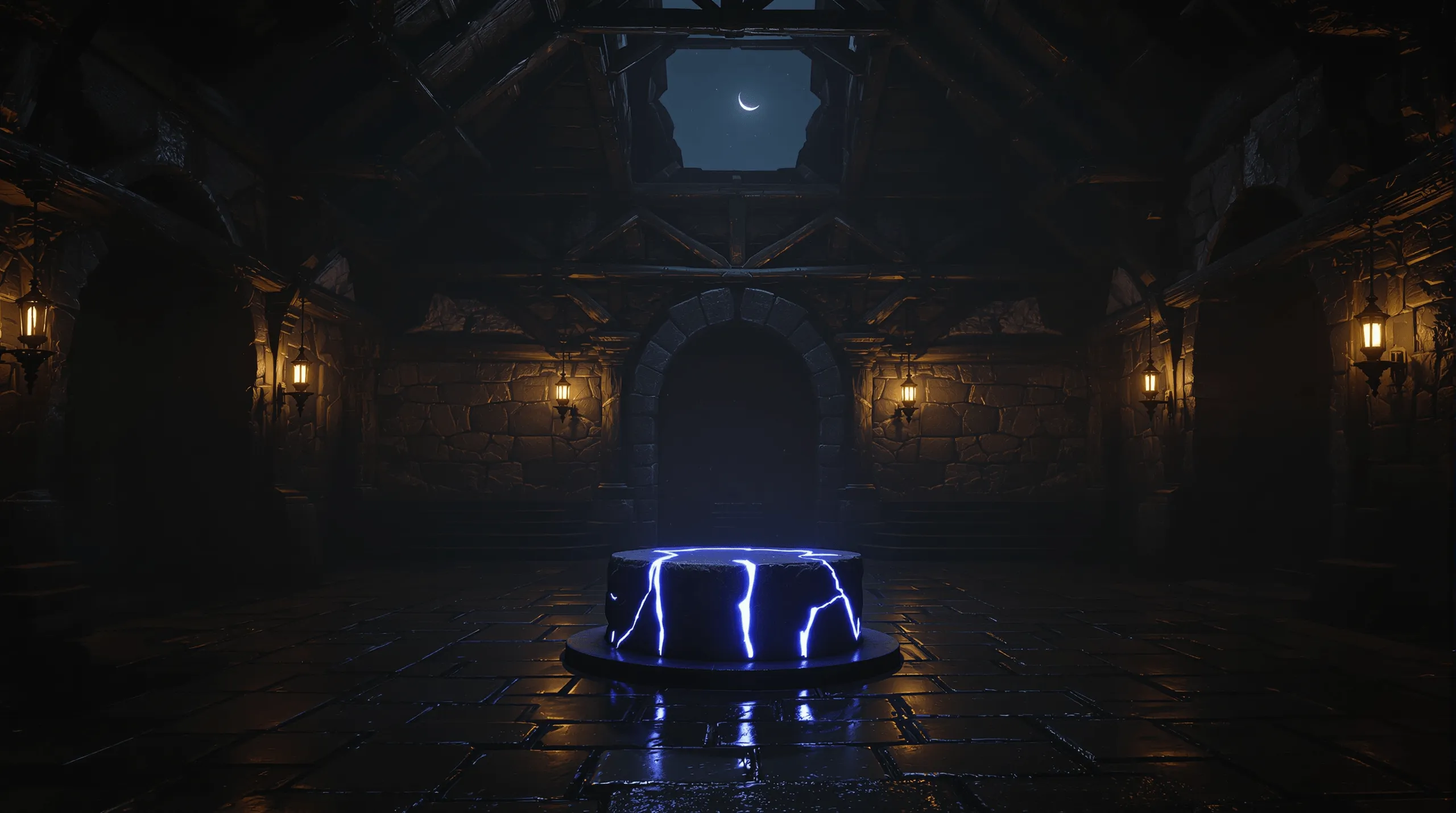
Leave the third course loose. Sealed stone holds the light, and holds it badly.
Cut into a lintel above a dry-stone doorway
The coast
Version 0.1 is one region: a cold northern coast, roughly the distance a person walks between breakfast and being cold. Cliffs stratified in grey and iron, talus at their feet, a shore of dark sand and a sea that is never once warm. Settlements sit on the terraces above the tide, built from what is here — dry-stone walls laid without mortar, weathered timber silvered by salt, split-shingle roofs with deep eaves, tarred rope on every stair and every drying rack.
The masonry tells you the most about this place. Walls are laid with one course left deliberately open, because sealed stone holds the Veil and holds it badly. Every building here is built to let the light through.
The coast is an edge, not a centre. People arrived from inland and their maps stop being useful about a day past the treeline. That is not mystery for its own sake — it is where v0.1 ends and where the work continues.
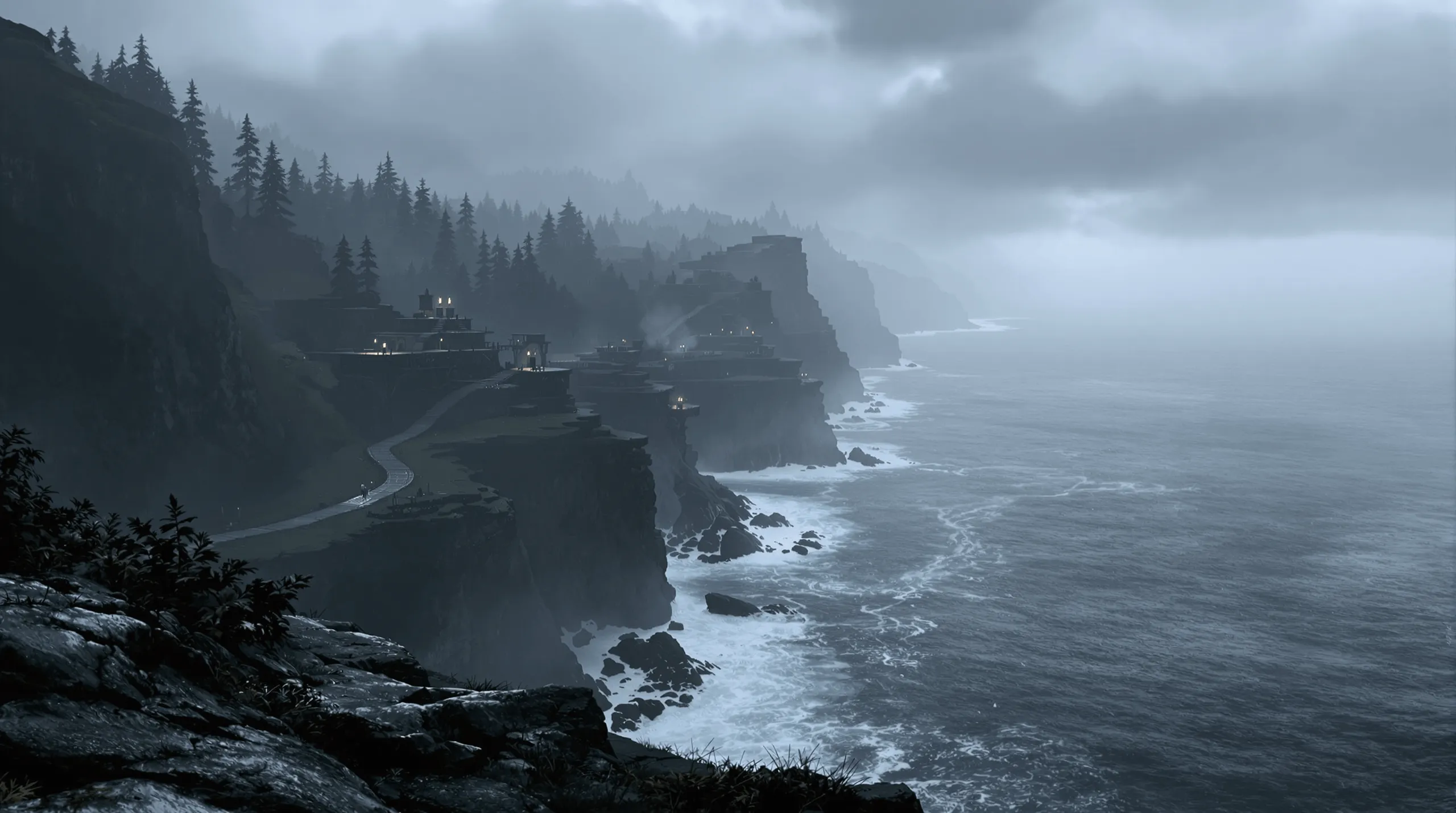
Spend it going up. Walk down.
Scratched into the top step of the shore stair, by many hands, over many years
Who is out there
- Wardens They hold a stretch of coast, not a rank.
- A warden is whoever has walked one stretch long enough that people ask them about it. There is no commission and no insignia to lose. You recognise one by wear: rope callus across both palms, a lantern hook rubbed bright on the belt, one shoulder of the coat faded pale where the strap has sat for years. They keep the lantern lines lit along the cliff paths, count what the coast is owed out loud so nobody has to guess, and are notably unimpressed by anyone who solves a two-minute climb by spending Veil on it.
- Covenants Not a faction. A debt you can hold in your hand.
- A Covenant is an agreement, recorded as a carved token of bone or wood on a cord. The cuts are abstract — no crest, no heraldry, nothing you would read as writing, and no two carvers work quite alike. Some people wear their tokens where they can be seen and some wear them under three layers, and that choice tells you as much as the token does. Somebody carrying three at the belt is either extremely useful or extremely committed.
- Scavengers The tide line pays daily, which is more than anything else here does.
- They work the strand after storms, the talus under the cliffs, and the Veil-quiet stone that masons reject and someone else always wants. They carry more rope than blade, and the blade is a short single-edge tool that can fight rather than a weapon of renown. Their bags are patched with whatever thread was to hand, and a good scavenger can tell you which cove a piece of tarred cordage came off by the way the salt has eaten it.
- Travellers Everyone here arrived. It is the only thing they all have in common.
- The coast has no native population it will admit to. People turn up, take a season’s work, and either stay until their coat fades on one shoulder or leave before the fog season. You begin as one of them: three days out of the last settlement, sensibly packed, wearing charcoal cloth and one faded earth tone, carrying nothing that glows. The first mineral fitting comes later, with the first Technique.
Rope: four coils, one bad. Oil: enough. Hands: two. That is the whole account.
Inventory, back of a warden’s lantern-line ledger
Varkuun
Wardens do not name individuals and do not put a plural on it, which tells you how they prefer to think about the problem.
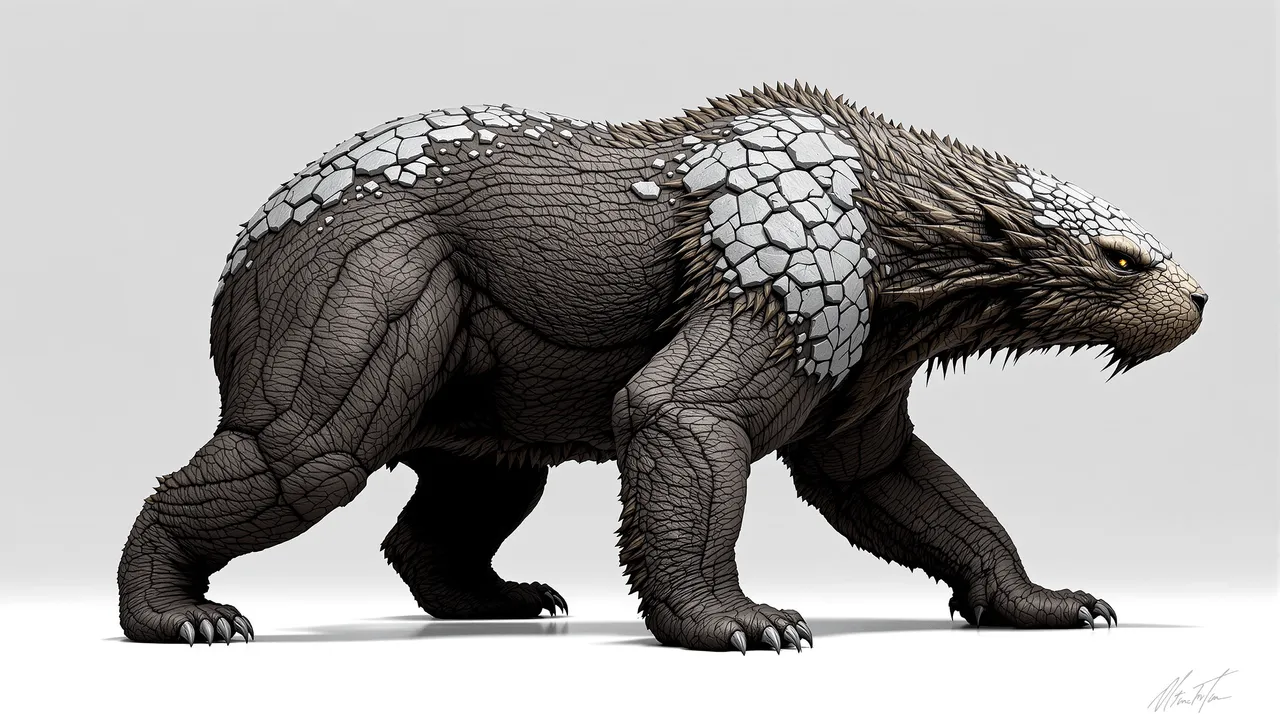
A quadruped at large-bear scale, heavy through the shoulders and low through the hips, with forelimbs noticeably longer than the rear so it stands nose-down and moves with a pulling, digging gait rather than a running one. Its splayed clawed forepaws carry most of its weight and do most of the killing.
Mineral growth erupts through the hide in irregular patches at shoulder, spine and forelimb, with bare weathered hide between, so the outline is lumpen and asymmetric rather than armoured.
The design calls for Veil fractures to run under the skin as luminous lines that widen as it commits, so the only warning you get is the light. The concept plate does not show them yet; that is work for the production art pass.
Honestly: Varkuun is written, not played. The class and its phase component exist in the repository; there is no mesh, no skeleton and no animation, and it appears in no build. Nobody has fought it — including us. The plate here is concept art.
Past here the maps were drawn by people who came back. Not by people who kept going.
Boundary stone, inland road, the last one anybody maintains